
Compare / Autonomous coding agents
Jigward and OpenHands
Two ways to get engineering work done.
OpenHands is an open platform for agentic software development from All Hands AI. A developer hands its agents a coding task, and they plan, write and apply the change across the codebase.
Jigward is an AI engineering coworker your whole team hires.
A coworker, not another tool.
-
It works where your team works
Mention it in Slack, assign it a Jira issue, ask it to review a pull request. It answers in the same place.
-
It belongs to the whole team
Engineers, tech leads, QA engineers and analysts give work to the same coworker, and it keeps what the team settled.
-
It brings work back, and leaves the decision
A report with its evidence, a draft pull request or a Jira issue. Merging and deploying stay with people.
Two ways to work
Open-source AI coding agent platform
OpenHands
A developer starts a conversation in Agent Canvas or OpenHands Cloud, or an automation starts one from GitHub, Slack, Jira or a schedule. Its agent makes the change across the codebase, runs the tests and opens a pull request for engineers to review.
AI engineering coworker
Jigward
The team hands Jigward work where it already talks: a Slack thread, a Jira issue, a pull request. It comes back in the same place with a report, the evidence and a draft pull request, and it keeps what the team decided for the next task.
Side by side
| Question | OpenHands | Jigward |
|---|---|---|
| What it is | An open platform for agentic software development | An AI engineering coworker your team hires |
| Works for | Developers, each with a workspace, and teams in a shared organization | The whole team: engineers, tech leads, QA engineers, analysts |
| Where you reach it | Agent Canvas, OpenHands Cloud, Slack, GitHub, GitLab and Bitbucket | Slack, Jira and GitHub pull requests, where the team already works |
| What you hand it | Coding, code review, QA testing, incident triage and migrations | Code changes and the work around them: logs, browser checks, tickets, scheduled checks |
| What it remembers | Skills, and persistent memory when turned on | The team's decisions, and its understanding of each repository |
| What comes back | A pull request, with each conversation's history and tool calls | A report with evidence where you asked, and draft pull requests people merge |
| Best for | Running coding agents where the team chooses | Handing off the work a whole team shares |
When to choose which
Choose OpenHands when
- You want to choose the agent and the model, local models included.
- The team wants to run the agents on its own machines, VMs or Kubernetes.
- The work is building your own agents and CI workflows on a Python SDK.
Choose Jigward when
- The whole team, QA engineers and analysts included, gives work to one coworker.
- The work goes past the code, into logs, browser checks and tickets.
- You want a report with its evidence back where you asked.
See Jigward on a familiar problem
-
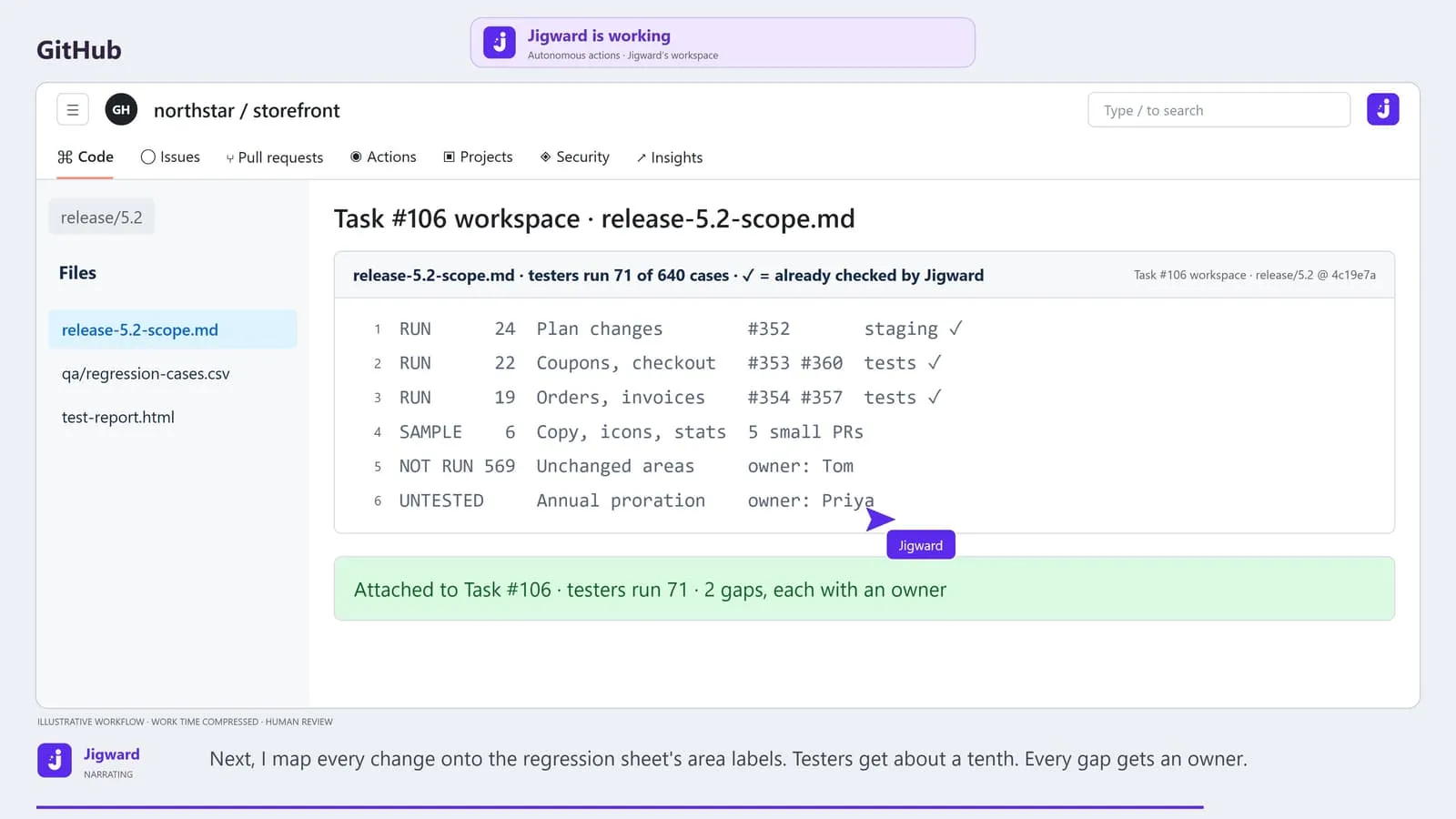
640 regression cases, two testers. What does this release change?
Running the whole regression sheet takes a week, so testers guess what to skip, and nobody records what went untested or who accepted it.
-
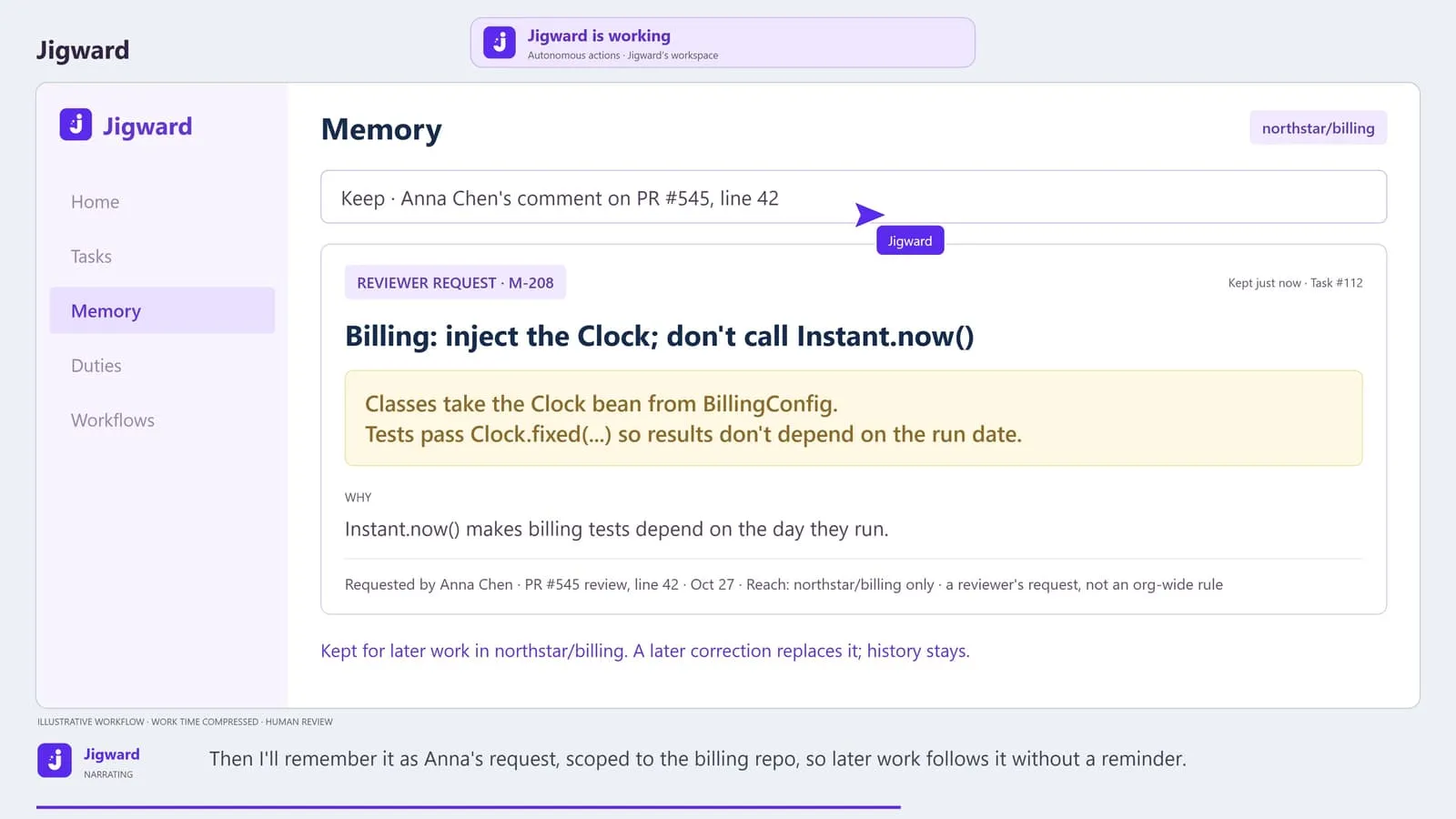
The same review comment on every pull request. Will this one stick?
Reviewers repeat the same correction on pull request after pull request, because the convention lives only in their comments.
-
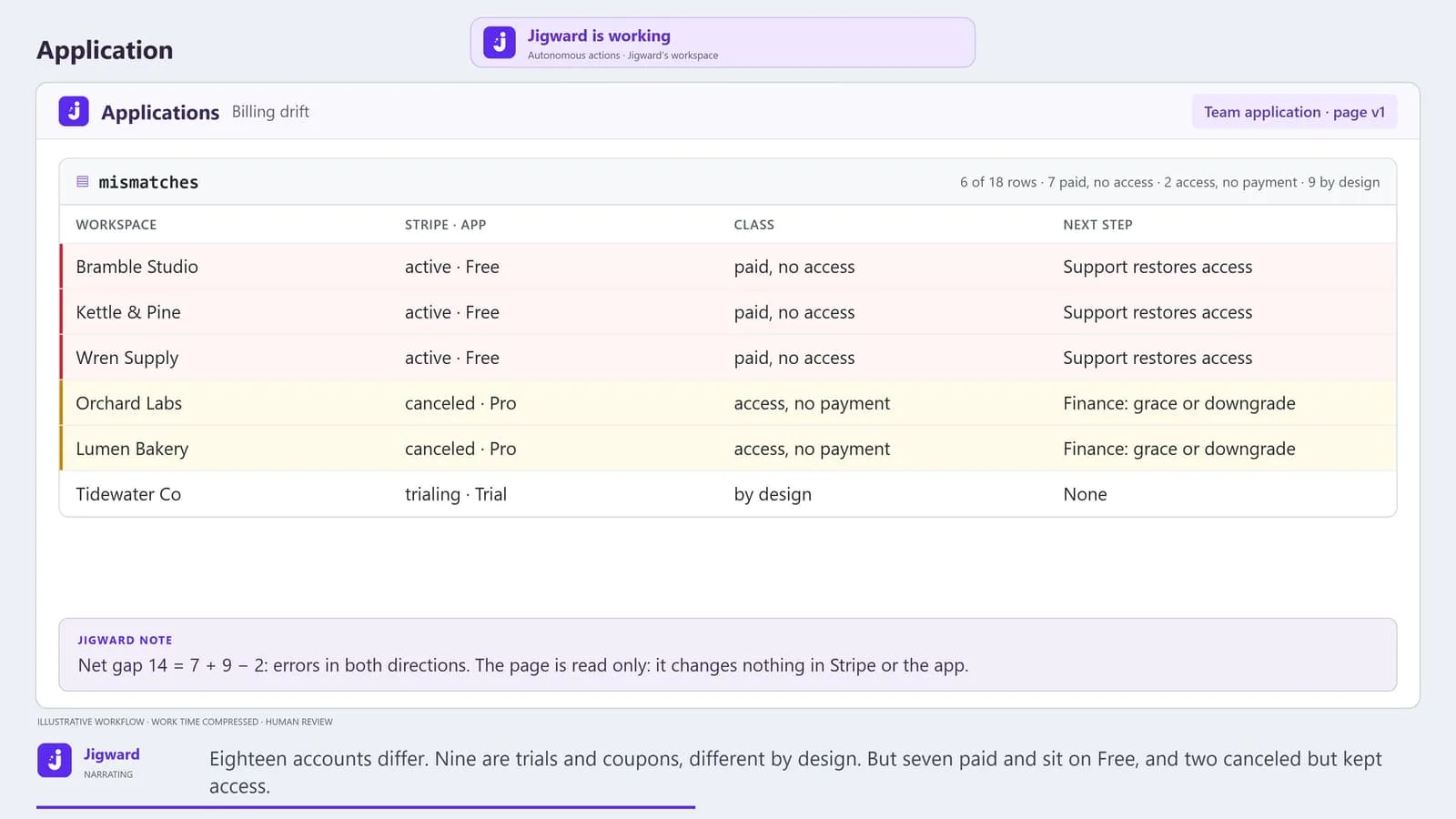
Stripe says paid. The app says free.
At month-end, Stripe and the product disagree on who is paying, finance can see two totals but not which accounts are wrong, and a paying customer is already locked out.
Questions
What is OpenHands?
OpenHands is an open platform for agentic software development, built on open source and supported by All Hands AI. A developer runs its autonomous agents on their own machine, in OpenHands Cloud or on the organization's own infrastructure, and they plan, write and apply changes across a codebase.
How is Jigward different from OpenHands?
OpenHands is built around developers running the coding agents and models they choose, where they choose. Jigward is built as a coworker the whole team hires. It works in the team's Slack, Jira and pull requests, takes on the work around the code as well as the code, and keeps what the team decided for the next task.
Can we use both?
Yes. They do not connect to each other. Engineers can keep handing OpenHands the coding tasks they run themselves and hand Jigward the work around the code, and people review the pull requests from both.
More comparisons
-
Autonomous coding agent
Jigward and Devin
-
AI coding agent
Jigward and GitHub Copilot cloud agent
-
Always-on coding agent
Jigward and Reason
Meet your next engineering coworker
Bring a question
from your own project.
See how Jigward can help your team understand the system and move the next task forward.
Jigward is in closed testing. Accounts are created by hand; sending a request does not create one.